The 2013 Tiptree Award winner has been selected!

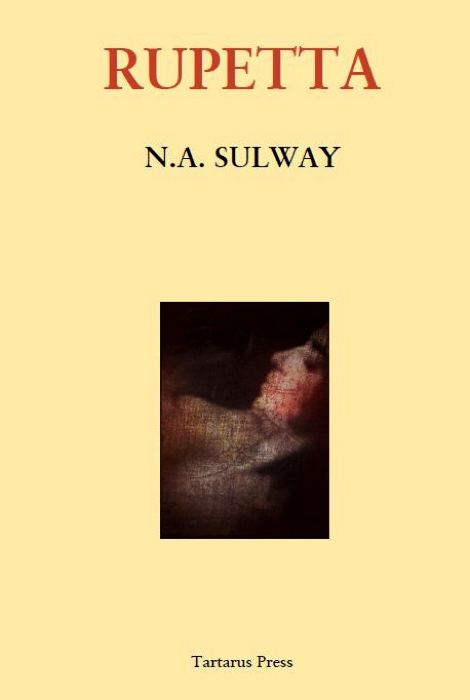
N.A. Sulway’s imaginative and highly original novel tells the story of Rupetta, an artificial intelligence created 400 years ago from cloth, leather, and metal,  brought to life by the touch of her creator’s hand on her clockwork heart.

N. A. Sulway — Rupetta

Although Rupetta is a constructed being, she is not a robot. Her consciousness is neither digital nor mechanical. Nor is she an android, a creature that is, etymologically, male. (The word is not gyndroid). Rupetta’s power does not come from her brain, but from her heart. Sulway has placed her construct not in the future, but the past, and made her female, created with traditionally feminine technology: sewing and weaving. Rupetta is a woman, made by a woman in the image of a woman, and the world changes to accommodate her existence.

A deft blend of fantasy, science fiction, romance, and even gothic horror, this beautifully written story challenges the reader’s expectations about gender and of a gendering society. It examines power and what makes an object of power, relationships and love, sexuality and identity, and how culture is shaped and history is made.

Rupetta was published by British independent publisher Tartarus Press in a limited hardback edition and a more widely available e-book version. Both are available for purchase from Tartarus’s website.

Nike Sulway lives and writes in Queensland, Australia. Her novel The Bone Flute won the Queensland Premier’s Literary Award for Best Emerging Author in 2000. Since 2007, she has been the co-director of Olvar Wood Writers Retreat, and one of the editors of Perilous Adventures, a literary magazine.

In addition to selecting the winner, the jury chooses a Tiptree Award Honor List. The Honor List is a strong part of the award’s identity and is used by many readers as a recommended reading list for the rest of the year. This year’s Honor List is:

  • Eleanor Arnason, Big Mama Stories (Aqueduct Press 2013) — Big Mamas are galaxy-sized women, powerful beings who can stroll around space and travel through time by sheer force of character. They are feminist, sensible, and adventurous. They come in all kinds of colors, and they survive by their wits, sometimes aided and abetted by Big Poppas. In these five stories, Arnason offers a new mythos, laced with both humor and wisdom.
  • Aliette de Bodard, Heaven Under Earth (Electric Velocipede #24, Summer 2012) — In a world with few biological women, some men have been medically altered to carry children and live as wives. When a new wife who was born a woman in a household, her presence causes Liang Pao, an altered man, to scrutinize to scrutinize his reasons for wanting to keep the status quo and to re-examine his own sexuality and feelings towards family, culture, status, and gender.
  • Nicola Griffith, Hild (Farrar Straus & Giroux 2013) — This stunningly beautiful historical novel describes what life might have been like for a woman whose mother has arranged for her to be “the light of the world”: the real-life St. Hilda of Whitby. In a rollicking good read, the reader is drawn into action and adventure as Hild becomes a king’s seer, a warrior, and a vessel through which the dynamics of power and gender in war-ravaged 7th-century Britain can be explored.
  • Alaya Dawn Johnson, The Summer Prince (Arthur A. Levine 2013) — Set in a somewhat dystopic matriarchal future Brazil, this lavish, provocative YA novel centers on June Costa, a rebellious teenage artist. She and her best friend Gil become entwined with Enki, the Summer King, who is elected to a position of celebrity and social eminence for one year before he becomes a ritual sacrifice. This book grapples with the nature of love, social and political conscience, creative rebellion and personal awakening, and an exploration of sexuality remarkable for its treatment of bisexuality and multiple relationships.
  • Ann Leckie, Ancillary Justice (Orbit 2013) — This political revenge story draws the reader into a fraught and ruthlessly colonizing military galactic empire. The protagonist is a human being whose consciousness began as a spaceship inhabiting dozens of bodies and vessels. Now stranded in one body, she bides her time and plots against the leader of the culture she once unquestioningly served. The story examines the brutality of occupation as well as exploring questions of gender and embodiment within a cultural framework that does not recognize gender, only class.
  • Bennett Madison, September Girls (HarperTeen 2013) — In this young adult fantasy, a young man named Sam spends a summer in a beach town where he encounters numerous Girls with mysterious pasts that even they have a hard time recalling. Exploring the myth of mermaids and gods of the deep through an examination of gendered power dynamics, Sam learns how to become a man in ways that differ from the models he’s been supplied with by his somewhat clueless father, abrasive older brother, and American culture in general.
  •   Sarah McCarry, All Our Pretty Songs (St. Martin’s 2013) — A modern-day retelling of the myth of Orpheus, this is the story of two teenagers who grew up closer than sisters despite their parents’ drug-fueled rock-star baggage. The girls’ relationship is tested when the mysterious Jack moves to town, along with strange and disturbing otherworldly interest in his musical talent. The lyrical beauty of the writing and the way the story’s concerns support the value of all of the girls’ relationships (not just the romantic ones) make this contemporary myth surprising and affecting.
  • Janelle Monae, Electric Lady (Bad Boy Records 2013) — Janelle Monae’s lastest album is a musical work of science fiction, the latest installment in the conceptually rich world of Cindi Mayweather, a prototype android. A cross-medium Afrofuturist fable, loosely inspired by Fritz Lang’s 1927 film Metropolis, Electric Lady has dramatic scope, powered by magnetic waves of sound and rhythm.
  • Helene Wecker, The Golem and the Jinni (Harper 2013) — This debut novel combines elements of Jewish and Arab folk mythology in an immigrant tale, the story of two supernatural creatures in 1899 New York. Ahmad is a jinni, a “man” made of fire. Chava is a golem, a “woman” fashioned of clay. A golem is traditionally male. By making Chava a female figure, Wecker expands this well-trod fantasy element. Although she is a powerful and supernatural being, Chava discovers that in 19th-century New York, her choices and freedoms are limited by the gender of the body she inhabits.
  • S. M. Wheeler, Sea Change (Tor 2013) — This debut novel tells a dark, fairy tale-like story of a young girl and her best friend, Octavius, who is an eloquent, intelligent kraken. When Octavius is captured, Lilly sets out to rescue him, bargaining with a greedy circus master, a witch, and a pair of gay bandits. She is transformed by her quest, giving up everything she has known, including her gender, to save her friend.

Nike Sulway will be honored during Memorial Day weekend at WisCon in Madison, Wisconsin. Sulway will receive $1000 in prize money, a specially commissioned piece of original artwork, and (as always) chocolate.

Each year, a panel of five jurors selects the Tiptree Award winner. The 2013 jurors were Ellen Klages (chair), Christopher Barzak, Jayna Brown, Nene Ormes, and Gretchen Treu.

N.A. Sulway’s Acceptance Speech for Rupetta

Delivered May 25, 2014, at WisCon 38 in Madison, Wisconsin:

I would like to thank Nene Ormes, firstly, for her warm introduction of Rupetta to you, and  for her role on the jury. I would also like to thank all of the jury members: Ellen Klages, who acted as the chair, Jayna Brown, Gretchen Treu and Christopher Barzak.

I would like to extend my thanks to the Motherboard of the James Tiptree Award, especially its founding members Pat Murphy and Karen Joy Fowler, not just for their role in this year’s awards, but for their vision in establishing the award, and their ongoing commitment to bringing the works that the Tiptree jurors uncover to the world.

I would also like to send out a special thanks to the indefatigable Jeanne Gomoll, who has been an amazing support and become a dear friend. Her warmth and good cheer have made the process of organizing my trip to Wiscon a pure joy.

Finally, I would like to thank my publishers. Many authors express gratitude to their publishers. In this instance, however, this is more than just a duty I feel I need to fulfill. My gratitude to Ray and Rosalie at Tartarus Press is heartfelt and sincere. I cannot thank them enough for bringing this work to publication. Rupetta was rejected many times before it found a home. It was rejected because it had too many women characters, because it had too many queer characters, because some speculative fiction publishers felt it was too literary for them, while some literary publishers felt it was too speculative. Rosalie Parker, at Tartarus Press, believed in this work from the beginning. She and Raymond Russell, her partner at Tartarus Press, are the fairy godmothers of this book. I cannot thank them enough for their faith in the work, and their hard work in bringing it to publication.

Rupetta begins on November 11, 1619. This is not an accidental, or incidental choice. On that night, almost four centuries ago, a young man by the name of Rene Descartes had three dreams that inspired him—over the rest of his life—to attempt to develop a new, comprehensive method for perfecting human knowledge.

One of his correspondents – Poisson – writes that around this time Descartes planned to build several automaton driven by magnets. Specifically, he had envisaged constructing a dancing man, a spaniel chasing a pheasant, and a flying pigeon.
It is no coincidence that my novel, which deals in part with some of the same philosophical problems that interested Descartes, begins that night.

I want to acknowledge Descartes tonight because he also—incidentally–inspired three of my own dreams, or wishes.

I figure, as this year’s winner of the James Tiptree Award, along with all of the other amazing gifts I have received, I get to claim three wishes.

When I studied Descartes and his work when I was at university, I learned that he was the father of an illegitimate child, Francine. The daughter of a friend’s housemaid (Helena Jans van der Strom). Very little is known about the relationship between Rene and Helena, except that she became his servant. I learned that Descartes planned to have the child removed from her home and her mother in Amsterdam and taken to France to be educated. Unfortunately, Francince died of scarlet fever when she was five years old, in 1640.

Some biographers have claimed that her death haunted Descartes for the rest of his life. But his grief interests me far less than the grief of Francine’s mother.

Rupetta is in some sense a book about compromised mothering. About non-conforming mothers. About mothers who are separated from their children. About grief. And longing.

My first wish is that we—and by we here I mean feminists—learn to speak about mothering in new, honest, complex and powerful ways. Not as an essential aspect of femininity, because it is not that, or as a biological right, but as a process we, as women, are often part of; a process many of us experience as both a source of power, and a means of oppression. As an intimate and deeply private process, and a very public role.

Descartes is, of course, perhaps most famous for the ideas he laid down in his Discourse on the Method and Principles of Philosophy. It is here that he decides that the only thing we can know without any doubt is that we are thinking beings.

That we think, and therefore we are.

My second wish is that we will continue and finally complete the work of undoing the false assumption expressed so powerfully by Descartes that it is our minds—our intellects—that are our only Truth. That our bodies are merely the vessels in which we live. I want to find a way to convince you to understand that we think with our bodies, and feel with our minds.

That we feel, and therefore we are.

Finally, I want to tell you a story that is not necessarily true, but it’s a good story and that, after all, should be enough. In the last years of his life, Descartes was summoned to the court of Queen Christina of Sweden. He was to act as her tutor and intellectual companion. He travelled to Sweden by ship.

Descartes had told the captain and crew that he was travelling with his daughter. No one aboard ship, however, had heard or seen her during the voyage. One night, a terrible storm overtook the ship. The waves were as tall as mountains. The sailors were afraid for their lives. Overcome with terror, and seeking some kind of magical cure for the sea’s fury, the sailors entered Descartes’ cabin. There, they discovered a cabinet, inside which was a living doll: a replica of Descartes’s dead daughter. According to one source, she sat up and turned to face her visitors.

The sailors took the mechanical Francine up on to the ship’s deck and threw her overboard.

My third and final wish is that, one day, we will find a way to encounter the new, the unfamiliar or uncanny, without fear or superstition or terror. That we will not, in that moment when the stranger sits up and turns to us, hurl stones or throw them overboard. But instead find a way to open our minds and hearts and embrace that strangeness on its own terms. With courage, and grace, and full acceptance.

N.A. Sulway accepts the 2013 Tiptree Award for Rupetta

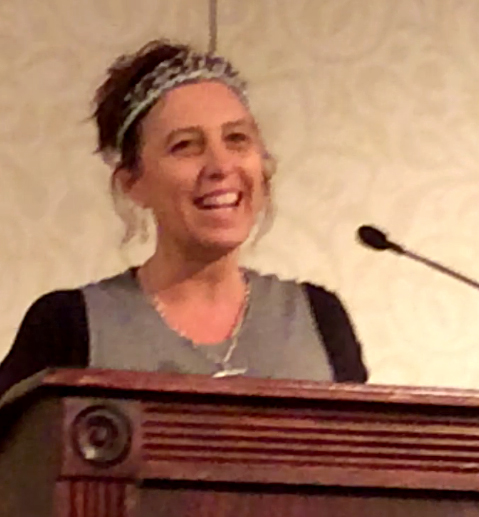
On May 25, in Madison, Wisconsin, at WisCon 38, N.A. Sulway accepted the Tiptree Award for Rupetta.

N. A. Sulway
N. A. Sulway

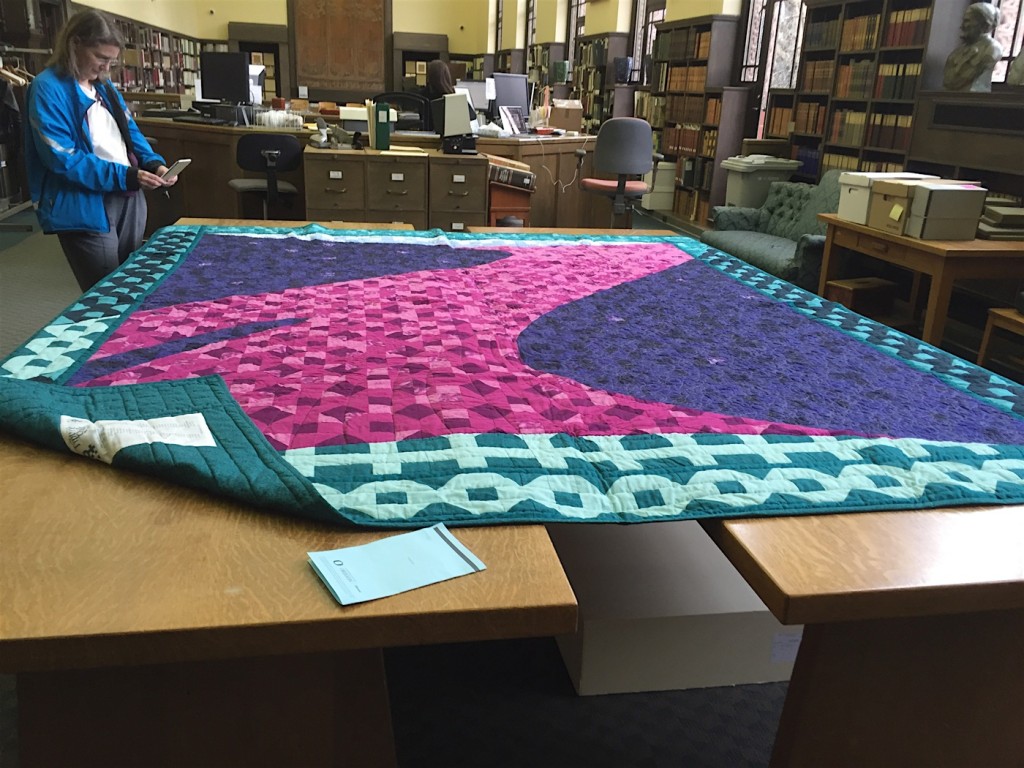
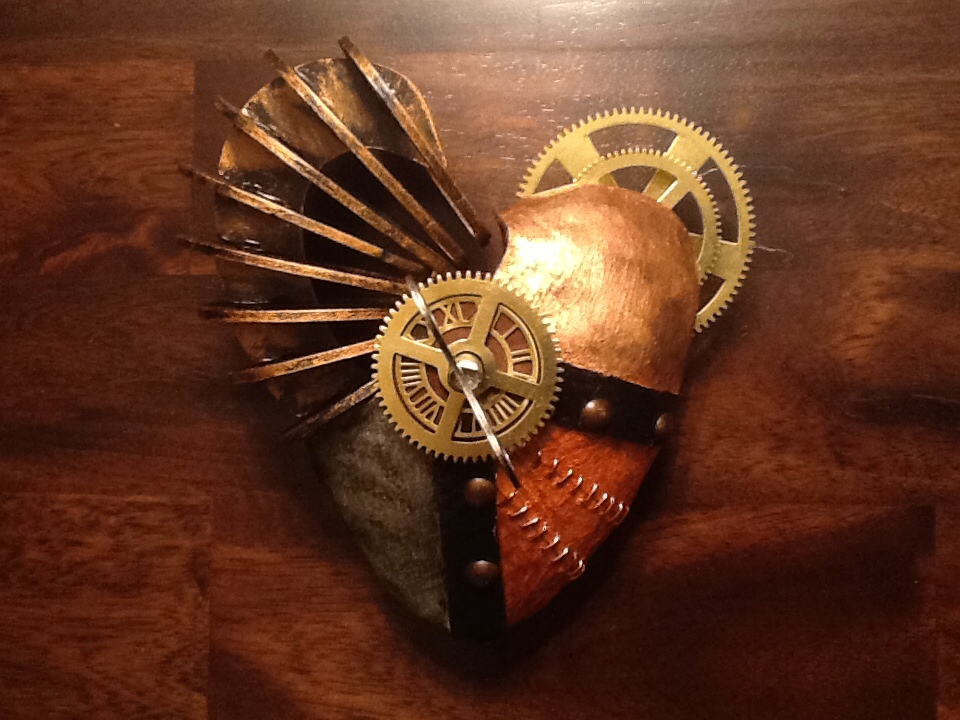
The Tiptree Award is especially pleased that the publishers of Rupetta have published a paperback edition of the book as a direct result of its receiving the award.As is traditional, Sulway received a check for $1,000, a certificate of winning, a box of home-made chocolates, a Tiptree t-shirt (designed by Freddie Baer), a Space Babe cloisonne pin, and a piece of original artwork. Rupetta‘s protagonist has a clockwork heart, we commissioned Carl Cone to make one for Nike.

Tiptree Award Clockwork Heart by Carl Cone

Nike gave an especially remarkable acceptance speech, which we are delighted to share with you all here

The 2014 jury is reading now

The 2014 jury is reading now. Jurors are Darrah Chavey (chair), Elizabeth Bear, Joan Haran, Alaya Dawn Johnson, and Amy Thomson. Please recommend stories, books, and other works that explore and expand gender, using the link to the left of this column.

Caitlin Kiernan wins the 2012 Bram Stoker Award

The Drowning Girl by Caitlin Kiernan didn’t only win the Tiptree Award; it also just won the Bram Stoker Award for Superior Achievement in a Novel, presented in New Orleans in June 2013. Coincidentally, we brought Caitlin’s Tiptree prizes to her that same weekend. Her art award was designed by Catherine Crowe and consists of a beautifully designed box which incorporates a removable magnetic brooch.

Homeward Bound

And so we headed home…with a stopover in Paris en route. Karen’s brother, who had lived in Paris, had advised us on choice of hotel, located near the Eiffel Tower. We negotiated the RER (Réseau Express Régional) trains and Metro with aplomb.  Having survived the unpronounceable streets of Warsaw, we scoffed at a few simple accent marks. We dragged our suitcases from the Metro station to the hotel, navigating cobblestone-free sidewalks. It was easy. We were seasoned travelers.

As it begins, so it ends — with suitcases dragged through the city streets.  No cobblestones, no rain — but sidewalks crowded with people. What, we wondered, were all these people doing wandering around on a Thursday evening? The restaurants were overflowing.

Exhausted and ready to be home already, we retired to our room at the Hotel Muguet and were just settling down when something happened.

What next?  Make your choice:

Option one:  We heard explosions outside the window.

Option two: We heard explosions outside the window.

Yes, there really were explosions. We opened the drapes and discovered that we had a view of the Eiffel Tower — silhouetted against fireworks. It was July 14, the anniversary of the 1789 storming of the Bastille — also known as Bastille Day.

We watched the fireworks. We laughed. We flew home.

Final questions to consider:

This trip report is written in the form of a “choose-your-own-adventure” tale, but all choices lead to the same place. Is this a cheat? Or does it reflect a belief that many paths can lead to the same end?

Is the writer (that would be me) trying to get away with something? If so, did I succeed?

Do the questions above far exceed the reach of this report? If so, why? If not, why not?

Another Visit to the Underground

Decisions are such ephemeral things. Decisions made that night did not affect our activities the next day.

Very early the next day, we caught the train to Warsaw. We did, at the station, make a rookie mistake and try asking for tickets to Warsaw rather than writing down our destination. But of course it turns out that Warsaw is actually Warszawa, which is pronounced Var-shav-a.

Of course confusion with platforms and trains and we rushed hither and yon, but aided by an elderly Pole with a complicated story, we made it to the right platform and found our way back to Warsaw (oops, I mean Warszawa). We went back to the street with the cobblestones and the guesthouse we had left the week before.

Rainbow over the Cloth Hall in Warszawa

Having left Krakow early, we had time for sightseeing in Warszawa, where we visited the Museum of the Warsaw Uprising. In 1944, Polish freedom fighters rose up against the Nazi and met annihilation and retribution. The museum tells this fascinating story. With photographs, recordings, artifacts, and more, exhibits recreate the atmosphere and events of the struggle of 1944, paint a picture of the realities of life under the Nazis, and present the Uprising as an example of the strength of the Polish spirit. The movie “Death of a City” shows Warsaw before the War — and after the Nazi backlash executed thousands of Poles and destroyed every building of importance in to Polish culture.  It’s impossible to summarize the museum (and the history it presents) in a trip report. It’s overwhelming and inspiring — adjectives that equally well describe Poland and the Polish people overall.

What next?  Make your choice: 

Option one:  Inspired by tales of how the Polish resistance used Warsaw’s sewers as an escape routes and fueled by bison grass vodka, we headed down a manhole (make that a “person-hole”) to explore the city’s underground. Eventually, we came back up and caught a plane to Paris.

Option two:  We caught a plane to Paris.

What a Handsome Devil!

Having had it with organized tours, we decided to spend the next day on a self-guided walking tour of Krakow. (Translation: we had a map and a guidebook and we started walking.)

This is a fabulous way to see a fabulous city.  You can read about Krakow in many a guidebook and web page, so we won’t provide a full travelogue. Rather, we will give you our own personal highlights:

  • In Rynek Główny (the city’s largest market square), we eat breakfast while listening to a trio of accordion players belt out the William Tell Overture as horse drawn carriages clopped past.
  • The extravagant decoration of the basilica of the Virgin Mary (or Kosciol Mariacki) warms my heart. Every square inch of the interior is decorated with gold or stars or paintings or carvings.  What could be better? Anything worth doing is worth overdoing, I say.
  •  We visit Galicia Jewish Museum, which was created to commemorate the victims of the Holocaust and to celebrate Polish Jewish culture. The permanent exhibition, Traces of Memory, offers a view of the Jewish past that was destroyed in Poland, documents the Holocaust, and offers a look at current efforts to preserve and recreate the memory of the Jewish past in Poland today.  The museum focuses on Galicia, an area now split between the Ukraine and Poland and coincidentally, the area from which my grandfather emigrated to Canada.
  • We descend 135 narrow stone steps in a dark passageway below Wawel Castle to the Dragon’s Cave. Legend has it that a dragon menaced the city until a prince fed it a sheep’s hide filled with sulfur. The dragon ate it in a single gulp, gulped water from the Wisla River, and then exploded — a fine mix of science and fantasy.  Today, a fire-breathing bronze dragon sculpture stands by the river at the exit from the Dragon’s Cave.
  • We learn the word for ice cream (lody, and no, I don’t know how to pronounce it but at least it doesn’t have any diacritical marks).  We search everywhere in an effort to find the very best ice cream shop. Everyone needs a quest. We thought this was a good one.
  • We mispronounce and drink Żubrówka at the Singer cafe in Kazimierz, the Jewish quarter. No, we do not sing — the bar is named for the Singer sewing machines that are scattered about on the tables.
  • We meet an amazingly personable devil, just outside the basilica of the Virgin Mary.
  • Back in the market square, we mispronounce (repeatedly) and drank more Żubrówka while watching performers working the crowd: an opera singer, a troupe of fire dancers, and a levitating magician.
Polish vodka poster; woman in a dress like a business suit, smoking a cigarette
Polish vodka poster

What next?  Make your choice: 

Option one: After the third glass of vodka, Pat decides she will abandon writing in favor of levitation and fire dancing.

Option two: After the third glass of Żubrówka, Karen decides she will abandon writing in favor of opera singing and playing the accordion.

Questions to consider:

Did you know that I spent a year as the marketing director at The Crucible, Oakland’s school of fire arts? The Crucible offers classes in blacksmithing, welding, glass flame working, fire eating, and fire dancing, among other things. Do you think working at The Crucible means I am likely to abandon writing in favor of fire dancing? Or do you think I’ve already gotten the fire-dancing inclination out of my system?

Do you know how Karen feels about opera singing?  Are you sure?  Have you heard us sing to the winner of the Tiptree Award? Do you want to? (Consider your answer carefully.)

Notes from the Underground

As is so often the case, the truth lies in the gray areas between two extremes. Karen and I were given two boxes of Śliwka Nałęczowska w czekoladzie. One box made it back to the USA. Over the course of our remaining travels in Poland, the other box mysteriously and gradually became lighter and lighter — until we discovered it was empty.

Polish vodka poster: Beverages in flight

How could such a thing happen? Alien abduction, perhaps. I have heard that aliens are fond of chocolate. It is also possible that Żubrówka was involved.

But again, I digress.

The next day, we boarded a bus for Krakow and had an uneventful journey. In Krakow, we descended into the depths of the earth and met the Devil. In that order, but not like it sounds.

Our descent was into the Wieliczka Salt Mine. Feeling that it was our duty as tourists to take at least one organized tour, we signed up for a tour of the salt mine, which some say inspired Tolkien’s descriptions of the mines of Moria. The mine is a Unesco World Heritage site, after all.

First, a few pertinent thoughts.

  • We cannot pronounce Wieliczka.  Can you?
  • The mining of salt at Wieliczka began in the 13th century and continued for the next 700 years. Commercial mining stopped in 1996.
  • The mine now functions as a tourist attraction. People come from all over to see the amazing underground chapel carved out of the salt by the miners. In the tunnels and chambers are great walls of salt, statues of gnomes and popes and saints, glittering salt chandeliers and the mandatory carving of the Last Supper. There is an underground post office that takes a very very long time to deliver a postcard. (My mother can attest to this.)
  • The mine includes a labyrinth of tunnels, over 180 miles (300 km) of them, on nine different levels.
  • There’s an underground lake in the mine and an underground sanatorium where chronic allergic diseases are treated. Rumor has it that the mine reaches a depth of 1072 feet (327 meters).

The official tour does not include the sanatorium. On the official tour, you must shuffle along in a tourist group, descending a wooden stairway of 378 steps and following a tour guide for about 3/4 of kilometer, staying with the group and never lingering behind to lick the damp gray walls to make sure they really are salt….not that anyone would ever do that.

What next?  Make your choice:

Option 1: Pat and Karen dutifully stayed with the group, mailed letters from the underground post office, and returned to the surface unscathed.

Option 2: Despite having watched many horror movies in which it is fatal to leave the group, Pat and Karen snuck away in a dark tunnel, licked the walls (yes, they are salt), liberated the bored residents of the sanatorium, and went skinny-dipping in the underground lake.  Eventually, the cops were called and the group was ejected. Karen and I talked our way out of trouble and eventually returned to our hotel dripping wet and leaving salt stains on the carpet.

Questions to consider: 

Do you really think Karen and I, co-founders of the Tiptree Award, would stay with the group? Really? How much do you know about us? Have you read any of our books?  Have you read any books that won the award?

Wouldn’t Karen and I have dried off while in police custody? Why would we still be wet when we got back to the hotel? Does considering this detail influence your choice? If so, why? If not, why not?

Do you really think we would lick the walls of the mine?  Maybe I would, but Karen? I mean, she once belonged to the PTA.  Think about it.

Of Course, There Is Chocolate

Pawel, our conference organizer, seemed determined to make certain we experienced a great range of Polish culture — so we finished that day with a feast of Polish cuisine in a restored grain mill outside Lublin. We could not necessarily pronounce all the dishes that we ate, but we could (and did) enjoy them all.

The next day we returned to the university for discussion of gender and sexuality, of Hispanic SF, teaching SF, and much more, ending the day and the conference with the Awards Banquet at the Grand Hotel Lublinianka. The award presented to the Tiptree Motherboard was named for noted science fiction scholar Thomas D. Clareson, The Clareson Award has been presented annually since 1996. Past winners have included Frederik Pohl, James Gunn, David Hartwell, and Paul Kincaid.

Pat and Karen accept the Clareson Award

At the ceremony, Karen expressed the Motherboard’s appreciation, saying, “As everyone in this room knows full well, when you join a volunteer organization you’d best expect virtue to be its own reward.  That’s not meant as a complaint.  Pat and I have loved every minute of running the Tiptree Award.  We’ve met amazing people and read amazing work and it’s all been a very good time.  But we did start the award with a specific mission, to support and encourage a kind of speculative literature we worried was not being recognized, a literature very important to us.  And it’s hard to see from the inside whether an impact has been made.  So we are enormously surprised, gratified, and grateful that you’ve chosen to honor us with this award.  It makes us hope that we are, perhaps, achieving those initial, fundamental goals.”

From its inception in 1990, the Tiptree Award has been associated with chocolate. The first award was a typewriter made of chocolate, and all subsequent awards have included chocolate. For that reason, the SFRA presented the Tiptree Motherboard with a delicious but difficult-to-pronounce addition to the usual plaque:  Plum in Chocolate or Śliwka Nałęczowska w czekoladzie.

Polish ad for chocolate beverage

What next?  Make your choice: 

Option 1:  Demonstrating our great will power, Karen and I transported the chocolate back to California, where we shared it with other Motherboard members Debbie Notkin, Jeanne Gomoll, Jeff Smith, and Ellen Klages.

Option 2: That night, Karen and I devoured all the chocolate, washing it down with Żubrówka, a specialty of Poland. (In English, Żubrówkais called bison grass vodka, but why call it that when the native Polish offers so many exciting diacritical marks and opportunities for mispronunciation?)

Before you make your choice, here are some questions to consider:

How do you feel about diacritical marks? If you like them, say Śliwka Nałęczowska w czekoladzie three times fast. Do you still like diacritical marks?

Is it proper to eat something you can’t pronounce? What if the item in question is chocolate? Does that change the rules?

Is unpronounceable chocolate better when washed down with an unpronounceable beverage?

Żubrówka can be mixed with chilled apple juice to make a drink known in the United Kingdom as a “Frisky Bison.” Do you think there is a name for a blend of Żubrówka and chocolate? Should there be? Or is the whole thing a very bad idea?